Content Architecture for Modern Search: Writing for Humans and Search Engines
How logical heading hierarchies, semantic HTML landmarks, direct question-answering, and internal topic clusters improve organic search visibility.
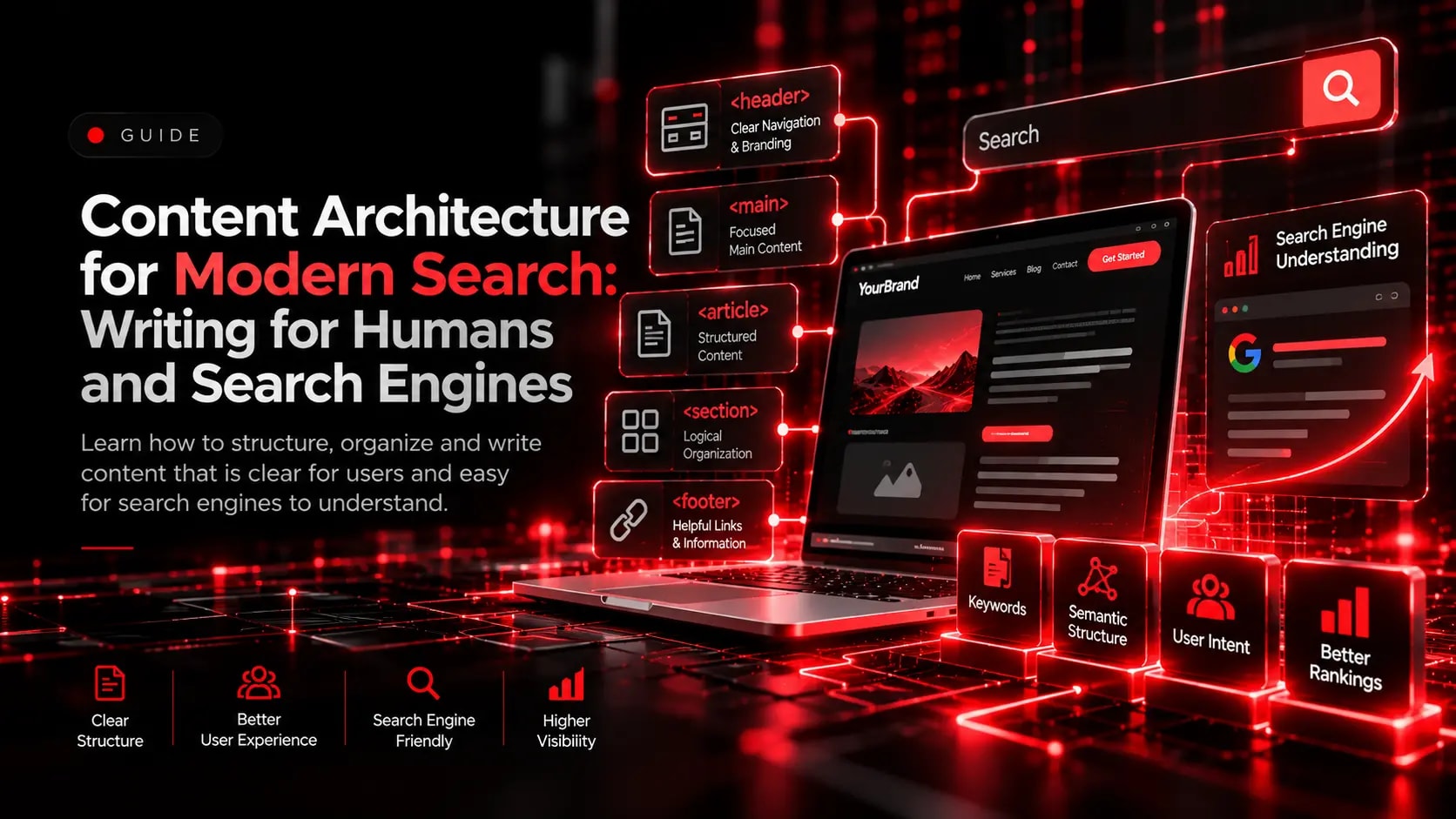
Modern search engines evaluate how thoroughly and clearly a website covers its subject area. Thin pages stuffed with repetitive keywords struggle to earn trust—both from algorithms and from human buyers.
1. Structure Every Page With a Logical Heading Hierarchy
Use a single descriptive <h1> that states the primary topic of the page, followed by <h2> and <h3> subheadings that break complex topics into scannable sections.
2. Connect Services, Case Studies, and Insights With Internal Links
- Link educational blog articles to the relevant core service pages and portfolio case studies.
- Use descriptive anchor text (such as “Technical SEO & Organic Growth”) rather than generic “click here” labels.
- Ensure every important page is reachable within two to three clicks from the homepage.
3. Answer Real Customer Questions Directly
Include concise FAQ sections and practical checklists that address timeline, scope, technology choices, and deliverables honestly.
Explore Related Capabilities & Work
Intime Webs Services
Work With Intime Webs
Want a content and internal-linking architecture that scales?
Intime Webs plans and builds search-friendly content hierarchies, service hubs, and insight libraries.
Continue Reading · Related Insights
View All 20 Articles →
A Technical SEO Checklist for New Websites
Launching a website involves more than publishing attractive pages. Use this practical checklist to ensure search engines can discover, crawl, understand, and index your site from day one.
Local SEO Architecture: How Service Businesses Win Regional Search
How to structure service pages, LocalBusiness JSON-LD markup, and regional relevance signals so nearby and multi-region customers can find your business.
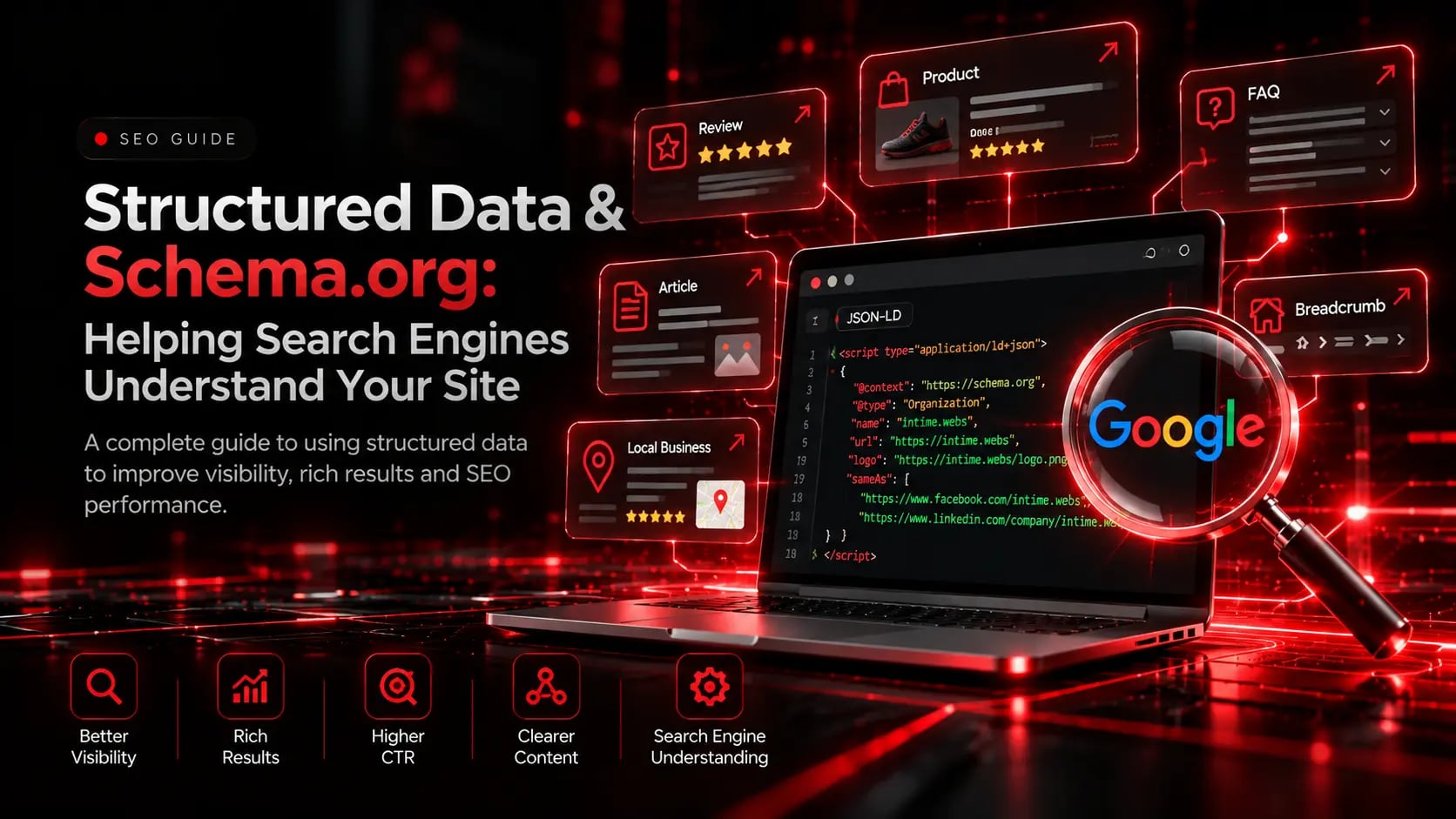
Structured Data & Schema.org: Helping Search Engines Understand Your Site
How clean JSON-LD structured data connects your organisation, services, articles, and FAQs into a machine-readable knowledge graph for search engines.